ENDOGENOUS
IMMUNE REGULATION
Endogenous metabolites help tissues calibrate immune activity—when to activate, when to restrain and how to maintain balance.

OUR SCIENCE
APG-157 is designed to engage immune-regulatory pathways that are also influenced by endogenous metabolites, small molecules naturally produced by the body that help regulate immune activity and maintain tissue balance.
By acting upstream within the tumor immune microenvironment, APG-157 is designed to reduce immune suppression and restore coordinated antitumor immunity.
FEATURED PODCAST
Conversation about Aveta’s approach to reprogramming the tumor immune microenvironment.
Endogenous metabolites help tissues calibrate immune activity—when to activate, when to restrain and how to maintain balance.
APG-157 is designed to act within conserved regulatory pathways upstream of immune checkpoints.
The objective is to change the conditions that determine the emergence and persistence of productive antitumor immunity.
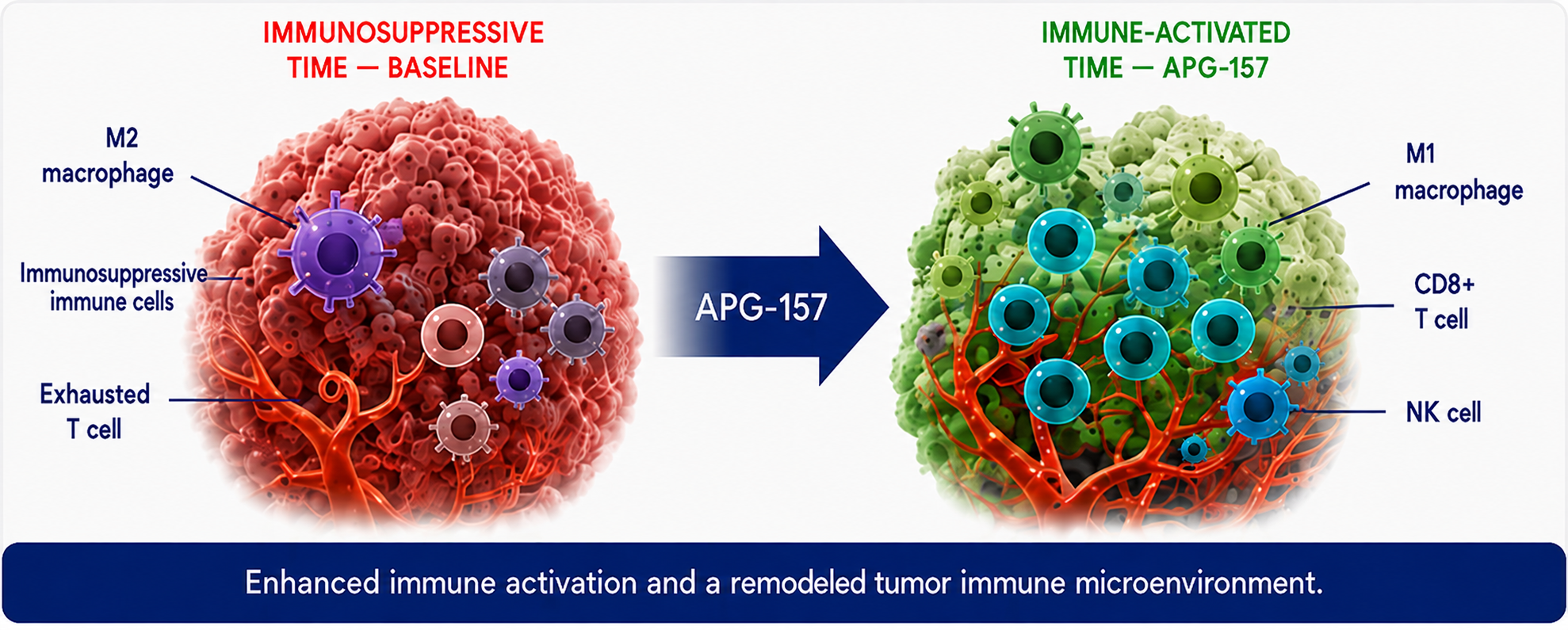
APG-157 modulates NF-κB and STAT3 signaling, pathways associated with tumor-promoting inflammation and immune suppression.
APG-157 is designed to shift tumor-associated macrophages from an immunosuppressive M2-like phenotype toward the tumoricidal M1 state.
Macrophage repolarization is designed to support greater CD8+ T-cell and NK-cell activity within the tumor microenvironment.
Together, these effects are designed to move the tumor immune microenvironment
toward a more productive antitumor state.
Explore the peer-reviewed science behind Aveta’s platform and APG-157.
View Publications